Cline vs Cursor
Quick verdict
Cline and Cursor are both excellent AI for developer tools, and the right pick depends on what you need. Cline is an open-source autonomous coding agent for your IDE, while Cursor is the AI code editor built to make you extraordinarily productive. For most people, Cursor is the safer default thanks to its wider adoption — but Cline can be the better fit for the right workflow.
If you're choosing between Cline and Cursor, you're not alone — they're two of the most talked-about AI for developer tools around, and the differences aren't always obvious from their landing pages.
We track hundreds of AI for developer tools on DesignBookmark, so we've put them side by side below: what each one is, where they overlap, how they differ, and a clear answer to which you should choose.
No fluff and no fabricated benchmarks — just an honest, practical comparison to help you decide fast.
At a glance
| Cline | Cursor | |
|---|---|---|
| Type | AI for Developers | AI for Developers |
| Pricing | Free | Freemium |
| On DesignBookmark | Listed | Featured pick |
| Categories | 2 | 2 |
Pricing is a general guide and changes often — always confirm current plans on each tool's site.
What they have in common
At a high level, Cline and Cursor are after the same thing. Both sit in our AI for developers and code & editors category, both are aimed at designers, developers and creators, and both are built to make that job faster and more enjoyable.
So if you're only going to use one, you won't be missing out on the fundamentals either way — the question is which one's particular take on AI for developer tool suits you best. That's what the rest of this comparison digs into.
 Cline
Cline
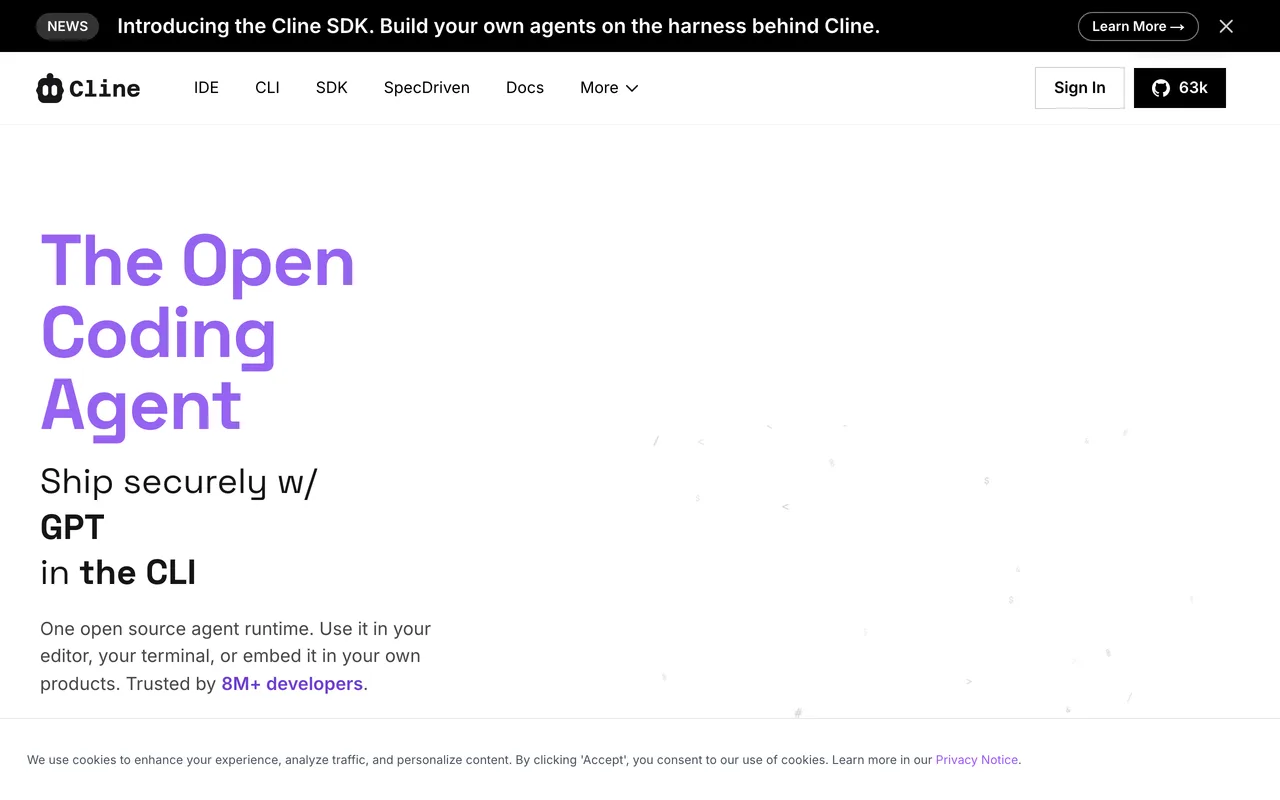
At its core, Cline is an open-source autonomous coding agent for your IDE. It earns its reputation by being genuinely useful day to day, not just impressive in a thirty-second demo.
Compared with Cursor, it's the one to reach for when you want something that just works out of the box. On the pricing side, Cline is generally free — always click through to confirm current plans, since they change often.
 Cursor
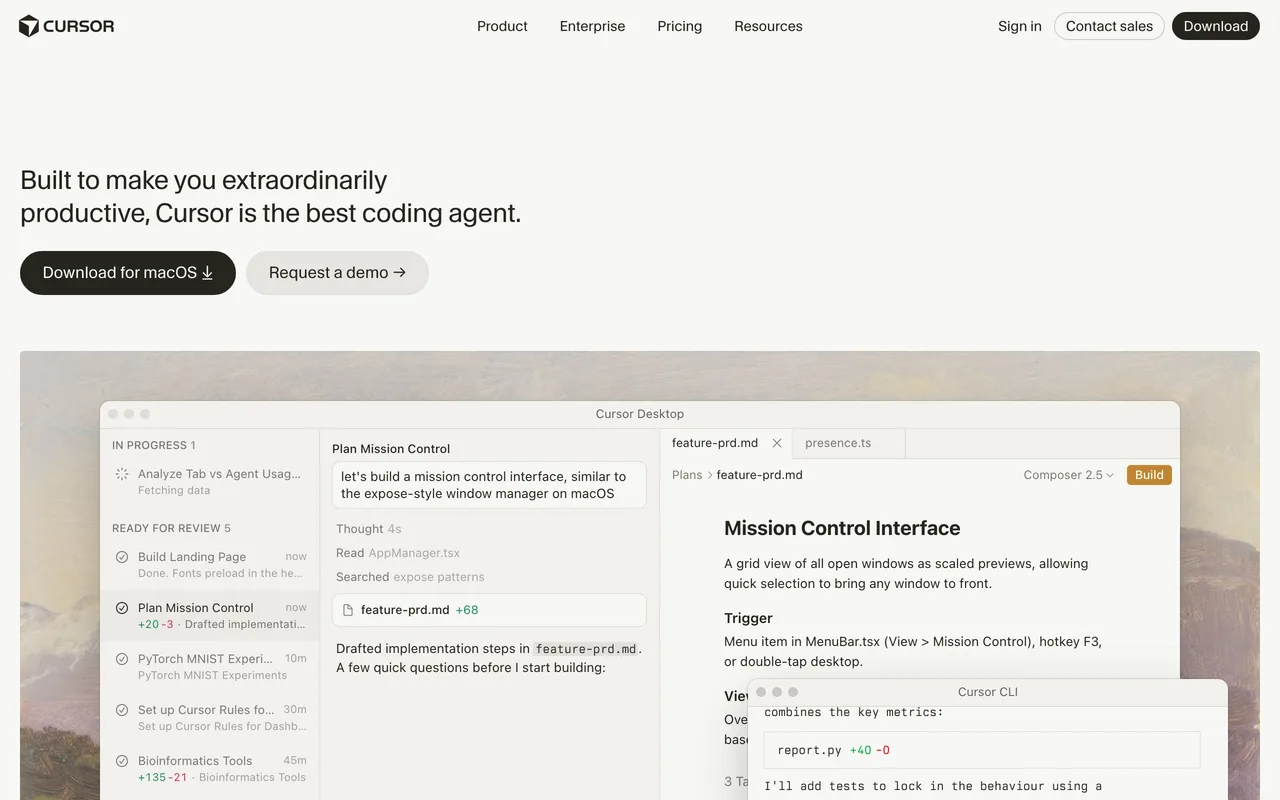
At its core, Cursor is the AI code editor built to make you extraordinarily productive. Its biggest strength is the everyday experience — the small details are thought through, so it gets out of your way and lets you work.
Against Cline, it tends to win people over when simplicity and speed matter more than a sprawling feature list. On the pricing side, Cursor is generally freemium — always click through to confirm current plans, since they change often.
How to choose between Cline and Cursor
Pick Cline
Choose Cline if you're watching your budget — its pricing model is the friendlier of the two to start with.
Pick Cursor
Choose Cursor if you want the more established, widely-adopted pick that most people reach for first.
Pricing & how you'll pay
Based on their general pricing models, Cline is the friendlier option to get started with, while the other leans more premium. That said, pricing tiers shift constantly — check the current plans on each site before you commit, especially if a specific feature you need sits behind a paywall.
Workflow & learning curve
The best AI for developer tool is the one that disappears into your routine. Think about which interface feels more natural to you, which integrates with the apps you already use, and which you'd actually open every day. A short free trial of each tells you more than any feature chart.
Scope — all-rounder or specialist
Both cover similar ground here, so neither is obviously the "bigger" tool. Judge them on how well they do the specific job you care about most, rather than the length of their feature lists.
Momentum & community
A tool is only as good as the team and community behind it. Both Cline and Cursor are actively maintained and listed on DesignBookmark for that reason — but it's worth a quick look at each one's changelog and community to see which is moving in a direction you like.
Frequently asked questions
Is Cline better than Cursor?+
Neither is universally "better" — they're both strong AI for developer tools, which is why people compare them. Cline suits you if you want an open-source autonomous coding agent for your IDE; Cursor suits you if you want the AI code editor built to make you extraordinarily productive. The best way to decide is to try both on a real project.
What's the difference between Cline and Cursor?+
They overlap a lot — both are AI for developer tools aimed at the same audience. The practical difference is emphasis: Cline is an open-source autonomous coding agent for your IDE, whereas Cursor is the AI code editor built to make you extraordinarily productive. That shapes which workflows each one feels best for.
Is Cline or Cursor cheaper?+
Going by their general pricing models, Cline is usually the more affordable place to start (Cline is free, Cursor is freemium). Pricing changes often, so always confirm the latest plans on each site before deciding.
Can I use Cline and Cursor together?+
Often, yes. Plenty of people use more than one AI for developer tool side by side — one as their main driver and another for the things it does best. There's no rule that says you must pick only one, though most settle on a primary tool over time.
Is there a free version of Cline or Cursor?+
Both generally offer a free or freemium way in, so you can try Cline and Cursor before paying for either.
The bottom line
The bottom line: Cursor is the easier one to recommend as a default, but there's no wrong answer between Cline and Cursor — they're both genuinely good AI for developer tools. Re-read the "how to choose" points above, take whichever one speaks to you for a quick spin, and keep the one that earns a permanent place in your workflow.